
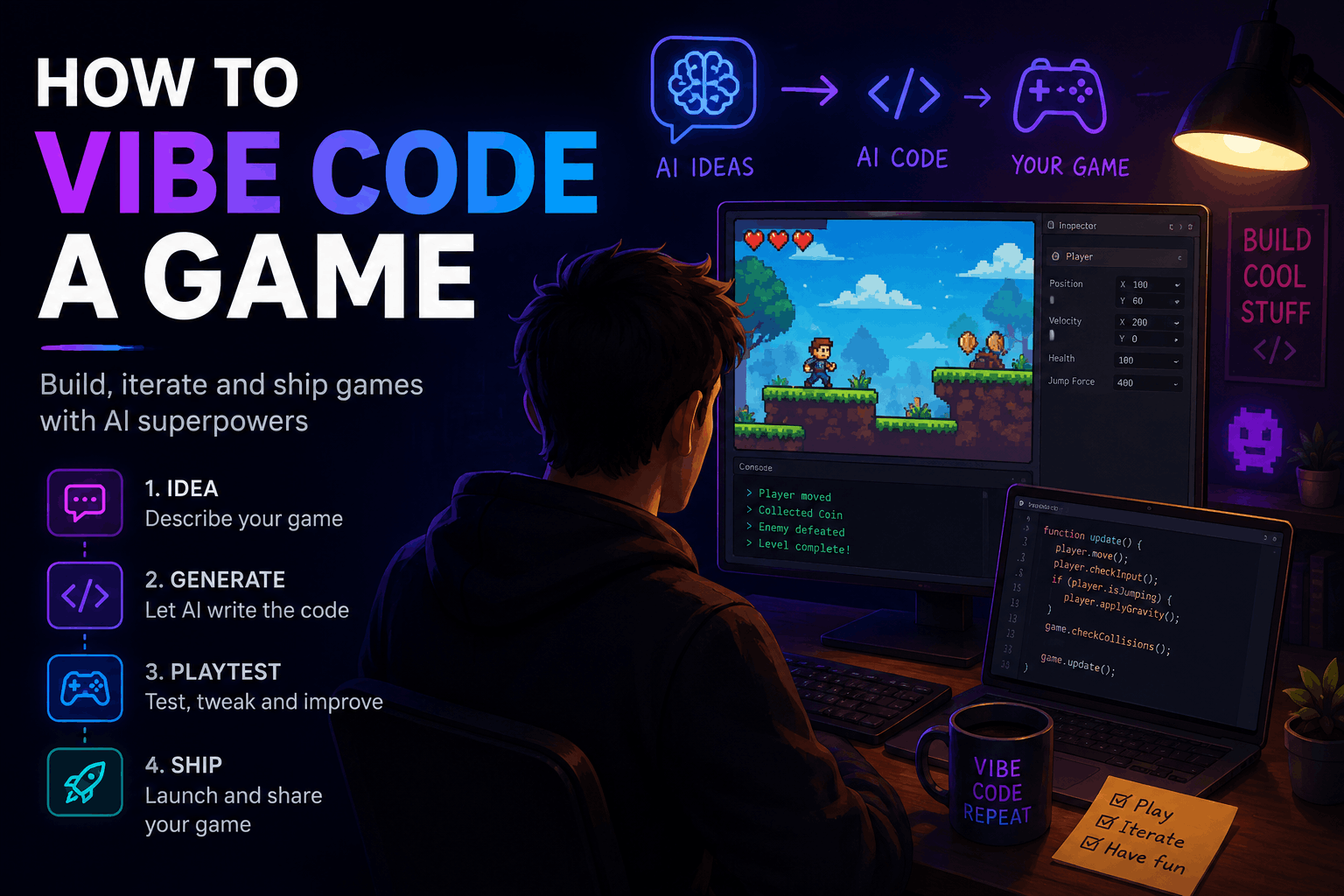
How to Vibe Code a Game in a Weekend?
This is a step-by-step guide to how to vibe code a game in a single weekend, starting from absolute zero | no engine, no boilerplate, no assets. By the end of two days you'll have a playable browser game live on the public internet, with a vote button, ready to list at VibeTopList.
This guide is for total beginners. If you've never written a line of code, you can still finish. If you have, you'll be done by Sunday morning.
What you'll build
Pick something small, weird, and visual. The successful vibe-coded games on our leaderboard share three traits:
- One sentence describes them ("a magnet-fishing game, fish rare metal objects from the river")
- One core mechanic ("click and drag to cast")
- You can play a full round in under 5 minutes
Bad first projects: a 4X strategy game, a Pokémon clone, an MMO. Good first projects: a tower defence, a one-screen platformer, a typing-based mini-game, and an idle game with one good theme. Browse idle, puzzle, or casual for inspiration | these are the easiest first steps.
What you need before Friday night
A minimal setup. Don't over-prepare.
- A computer (any, including a Chromebook if you're using Replit Agent)
- One AI coding tool. We recommend Cursor for desktops or Replit Agent for browsers. See our full comparison at Best AI Game-Building Tools in 2026
- An account on either GitHub (for desktop tools) or Replit
- An account on a free hosting service: Vercel, Netlify, or GitHub Pages. Replit hosts for you if you go that route
Skip everything else. Don't pick an engine yet. Don't read tutorials. The whole premise is that you'll discover the engine choice mid-build.
Friday night (1 hour): pick the vibe
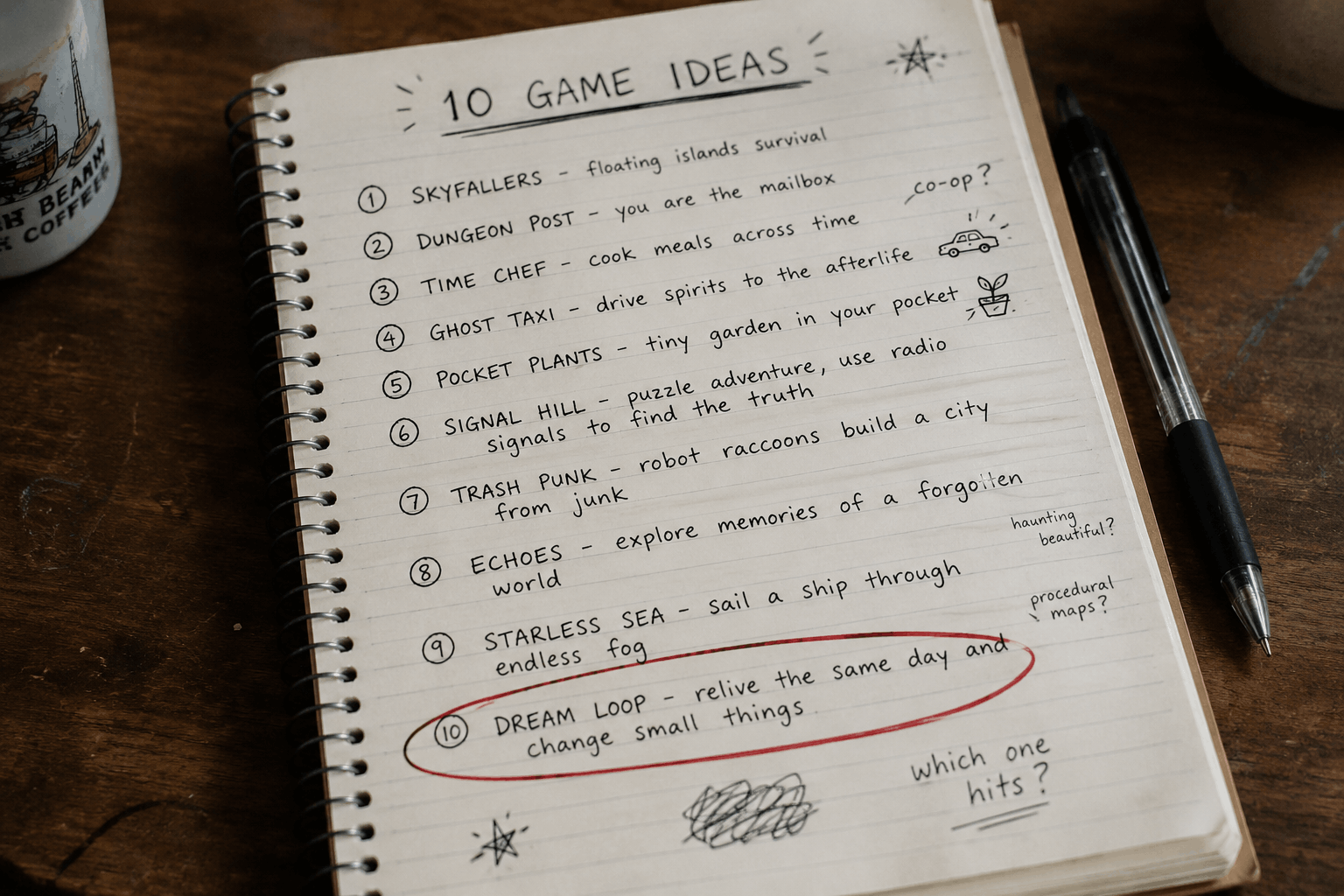
Sit with a notebook for 20 minutes and write down 10 one-sentence game ideas. They should all be small. Examples that worked for past jam winners:
- A roguelike where every weapon is a different kind of bread
- An idle game about training cats to do parkour
- A typing game where the wrong letters explode
- A multiplayer sumo where everyone is a different vegetable
- A horror game that takes place entirely inside an elevator
Pick the one that makes you smile. That's the vibe. You'll know it when you write it.
The "vibe" matters more than the genre
This is the part most first-time vibe coders skip and then regret. A bland prompt produces a bland game. A specific weird prompt produces something memorable. "Make a tower defence" gets you a generic tower defence. "Make a tower defence set inside a microwave where the towers are kitchen appliances and the enemies are popcorn kernels" gets you something that is way more unique and sets you apart from the rest.
Saturday morning (2-3 hours): the first prompt
Open Cursor (or Replit Agent). Create an empty project. In the agent panel, paste a prompt that follows this template:
I want to vibe-code a small browser game in a weekend. The game is: [one sentence].
The core mechanic is: [one sentence].
A round is 1-3 minutes.
Use plain HTML / JavaScript (or Phaser if you think it's better) | nothing that needs a build step.
Don't worry about audio or polish yet | just get a playable prototype where I can [the core action] and see something happen on screen.
Save everything in this folder. When you're done, give me a single command to run it locally.
Then watch the agent work. Don't interrupt for 10 minutes unless someone asks you a question. When it says it's done, run the command. Open the browser tab. Play.
It will be ugly. Some of it will be broken. That's normal.
Saturday afternoon (3-4 hours): iterate by feel
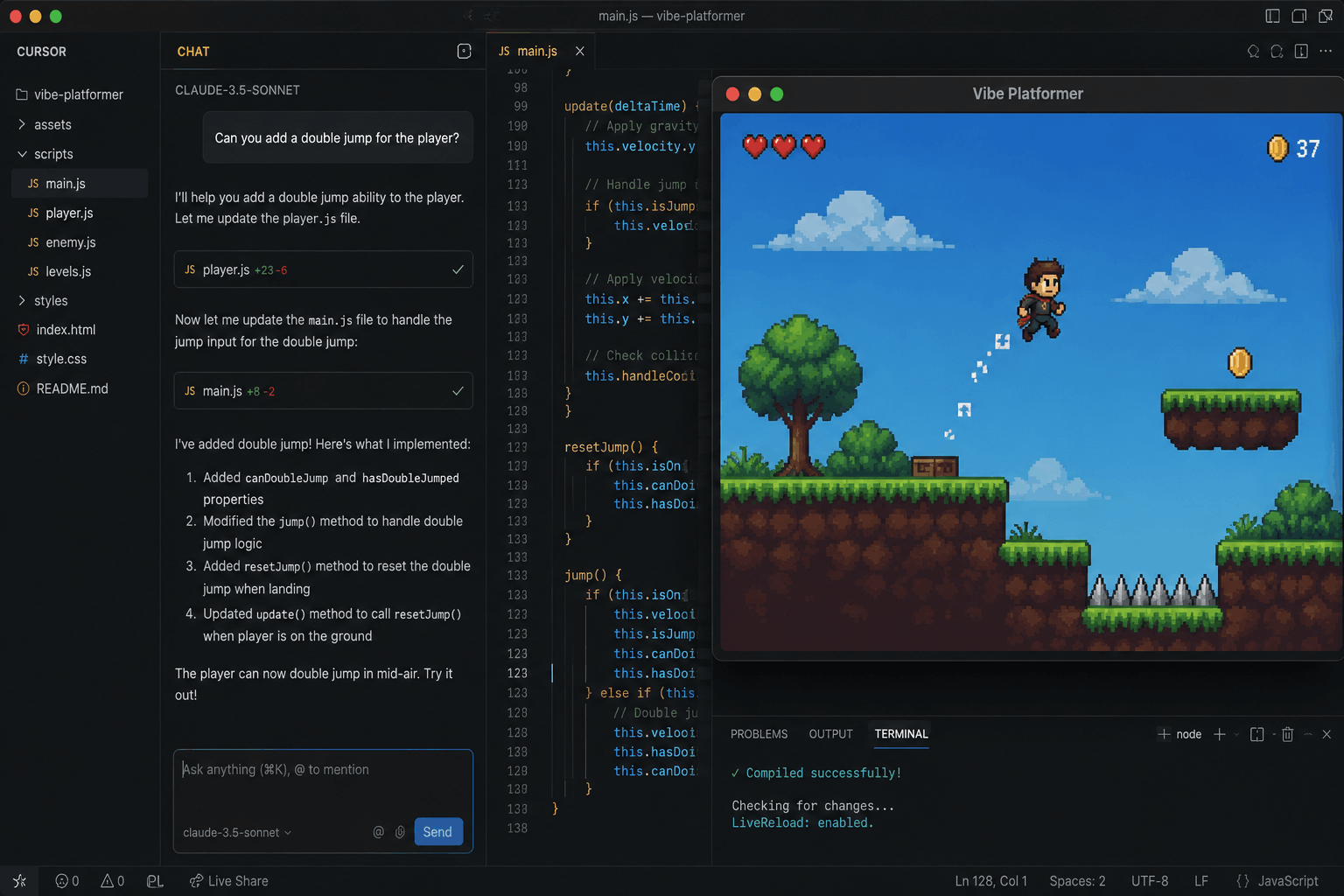
This is the part where you learn the actual craft of vibe coding. The trick is to give one specific change per prompt and to react in plain English.
Bad prompts: "make it better." "add features." "fix bugs."
Good prompts:
- "The character moves too fast. Halve the move speed and double the friction."
- "Add a scoreboard at the top right. The score should go up by 10 every time I [verb]."
- "When I die, fade to black for 1 second, show 'You died: score N', and let me press space to restart."
- "The enemies are spawning too uniformly. Make the spawn timer randomised between 0.5 and 2 seconds."
Repeat. Each round: see something you don't like, describe the change, accept the diff, play, repeat. After three or four hours, you should have something that loops cleanly.
When the agent goes wrong
It will. Three failure modes you'll hit:
- It edits the wrong file. Tell it specifically: "Only edit game.js." Most agents respect file scoping.
- It refactors something that was working. Use git. Commit every time the game runs cleanly. "Revert game.js to the last commit" is your panic button.
- It hallucinates an API. If something silently doesn't work, ask: "Show me the actual function signature for X you're calling." The agent will usually catch its own mistake.
Saturday night (1 hour): polish pass
One hour, three things:
- Title screen + restart flow. Even a one-screen title with the game's name and a "play" button transforms perception of polish.
- One sound effect. Generate one with Suno or use a free Freesound clip. Just one. Tied to the most-clicked action. Massive perceived-quality jump.
- One end state. Win or lose. With a score and a restart prompt. Without this, players bounce after 30 seconds.
Resist the urge to add a fourth thing. Polish keeps eating time forever. Set a one-hour timer.
Sunday morning (1-2 hours): ship it
Three steps to live:
1. Build (if needed)
If you used plain HTML / JS, skip this. If you used a build tool (Vite, Webpack), ask the agent: "Build a static production bundle and put it in /dist."
2. Deploy
Easiest: drag the folder onto Netlify Drop. Two minutes, instant URL. Or push to GitHub and connect Vercel | five minutes, automatic redeploys forever. Or stay in Replit and click Publish | one click.
Whatever you pick, by the end of step 2 you have a public URL like https://your-game.netlify.app. That URL is now your game's home for the rest of its life. Buy a domain later if you fall in love.
3. Make a banner and a screenshot
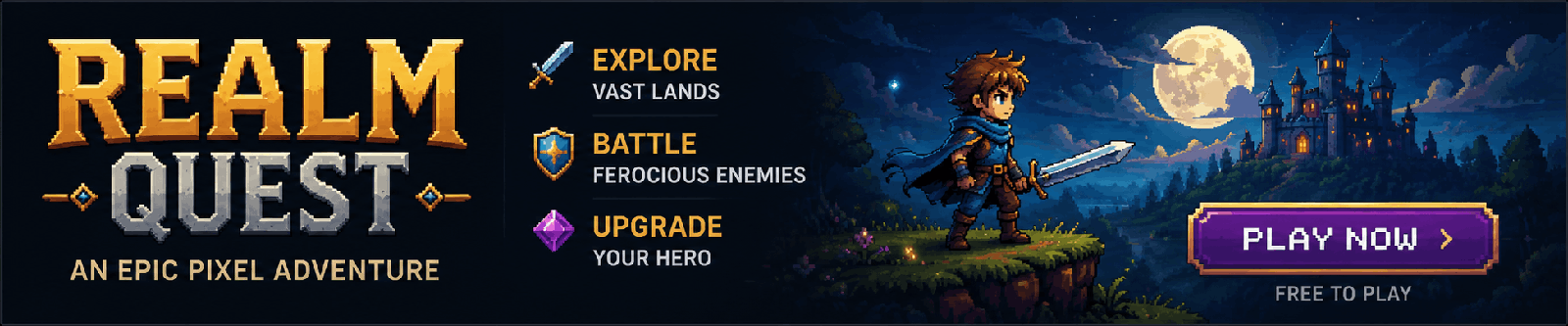
Generate a 728x90 banner | the leaderboard standard | with any image tool. Take 2-4 in-game screenshots showing the game running. These are what players see in the listing card.
Sunday afternoon (30 minutes): list and launch
Head to VibeTopList → Add Game:
- Sign up (email + password, 30 seconds)
- Verify your email
- Click "Add new game"
- Paste your URL, name, tagline, pick a category, upload your banner + screenshots, paste your YouTube trailer (optional)
- Submit. The listing goes live instantly | no admin queue.
Now the launch part. You need 5 to 10 real votes in the first 24 hours to escape page 4 of the leaderboard. Three places to share:
- Twitter / X with the hashtags
#vibejamand#vibecoding - Reddit:
r/IndieGames,r/WebGames, the relevant genre subreddit - The official Discord of the tool you used (Cursor, Replit, Rosebud, all have busy ones)
The vote URL on your listing supports a ?ref=username parameter | use it on the social posts so you can tell which platform sent which players.
What to do after launch weekend
Post-launch, three things move the needle:
- Read the votes. The leaderboard is public. If your numbers stall after 20 votes, your title screen or banner probably isn't selling the game. Iterate on those before you iterate on the game.
- Use our callback API. If you implement the vote callback, you can reward players for voting (cosmetic unlock, in-game item, premium currency). This single feature has the highest measured impact on retention.
- Plan the next game, not the patch. Most successful vibe coders run a portfolio of 3-6 small games. Patches help, but a second game listing doubles your leaderboard real estate. See How Indie Devs Are Making Money From Vibe-Coded Games in 2026 for the strategy.
Common mistakes to avoid
- Scope creep. If your weekend project has "settings", "achievements", and "online leaderboards" in week 2, you've lost. Ship the small thing.
- Hand-coding the boring parts. Don't write the menu yourself to "save time." That's the part the agent does best.
- Ignoring the agent's questions. If the agent asks for clarification, answer it. Skipping clarifications is the leading cause of bad output.
- Not committing to git. Even on a weekend, commit every working version. Vibe coding without version control is dangerous.
FAQ
Do I need to know how to code to vibe code a game?
No. You'll go faster if you can read JavaScript well enough to skim a function, but a complete beginner can finish this guide in a weekend. The skill being practised is judgement, not syntax.
Which AI tool is best for a first vibe-coded game?
For browser-only setup, Replit Agent. For the desktop with the lowest learning curve, Cursor. For a paragraph-to-game on autopilot, Rosebud AI. See our deep comparison.
How long does it actually take to vibe code a game?
A small browser game from idea to public URL is realistic in a weekend (8-12 active hours). A polished, jam-grade game with audio + multiple levels: 30-60 hours. A game you'd charge money for: months, but most successful vibe coders never go that route | they ship many free small games instead.
Can I sell a vibe-coded game?
You can, but the indie market is brutal. Most successful vibe coders monetize via banner ads (free games + traffic), donations, paid cosmetics, or by funnelling traffic to a paid product. We cover this at length in How Indie Devs Are Making Money From Vibe-Coded Games in 2026.
What if my game breaks and I can't fix it?
Two-step recovery: "Show me the most recent change that affected this behaviour", then "Revert that change." If you have git commits, ask "Restore the working state from the last commit before X." Most apparent disasters are one revert away.
Do I need original art for my game?
No. Placeholder shapes (rectangles, circles) are fine for v1. Players forgive ugly fast if the game is fun. Add real art only when the game itself is locked. Many of our top-ranked games use 100% AI-generated or simple geometric art.
Can I vibe-code a multiplayer game in a weekend?
It's harder but possible. Use a hosted real-time backend (Supabase Realtime, PartyKit, or Replit's database) and let the agent handle the wiring. Don't try to write a custom WebSocket server in 48 hours.
Bottom line
The smallest path from "idea on Friday" to "ranked game on the leaderboard" is two days of focused work and one Sunday-afternoon launch. Pick something weird and small, prompt by feel, ship anything, then iterate based on votes. List your finished game free at /dashboard/listings/new and use the leaderboard to figure out what to build next.
Built a vibe-coded game?
List it free on VibeTopList | pick up a permanent backlink, organic SEO traffic, and engaged players who actually vote.
+ Submit Your Game